
Mr. Hiren Bose’s Testimonial
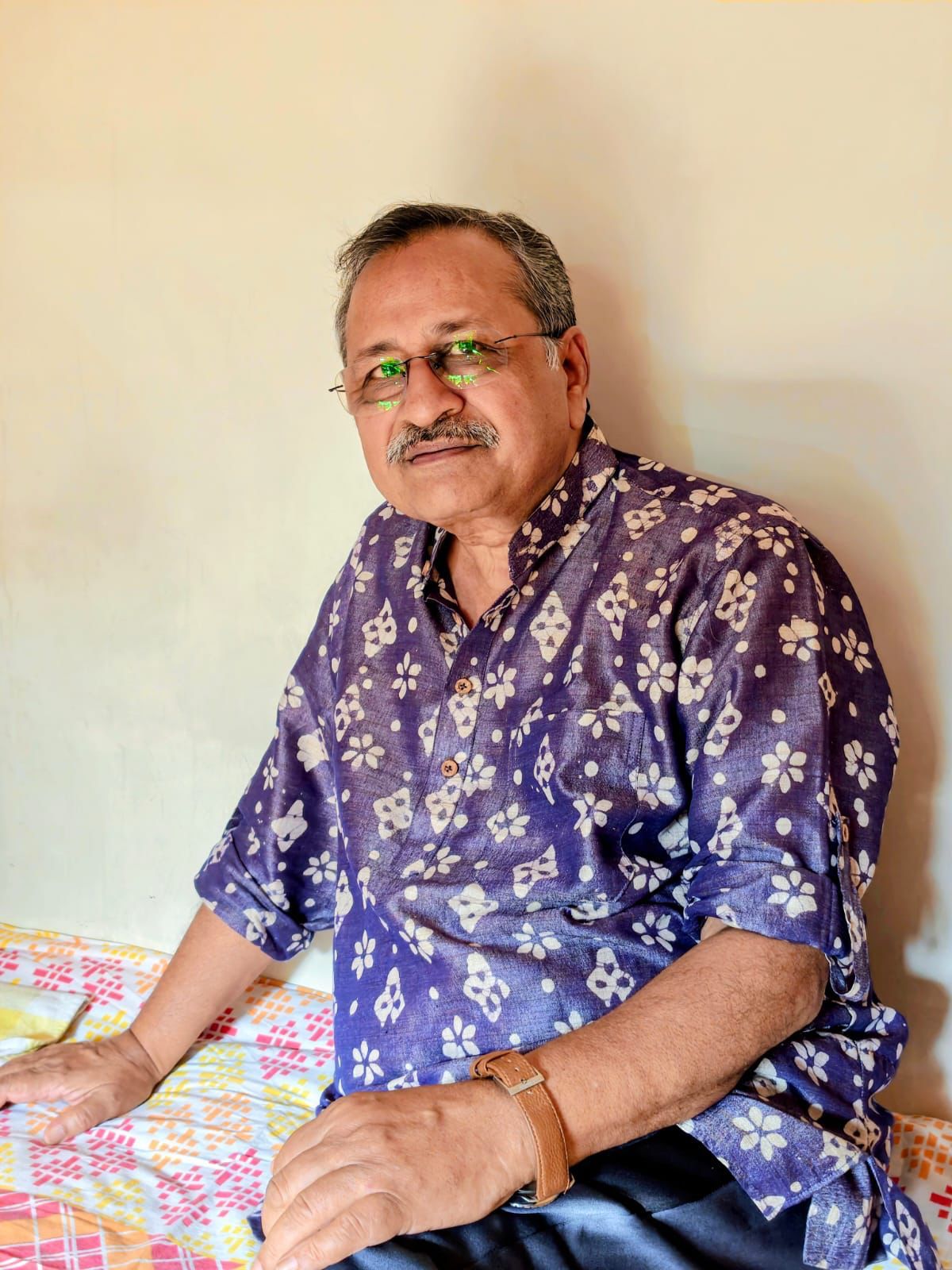
Reversing the Odds: My Journey Back from Stage 3 Fatty Liver
Diagnosis & First Consultation
In early July last, I was diagnosed with Non-Alcoholic Fatty Liver Disease (NAFLD) at Stage 3 by Dr. Aabha Nagral of Jaslok Hospital, Mumbai. A hepatologist and gastroenterologist renowned for pioneering liver transplant programmes and creating awareness of liver diseases across Western India, she is one of the founding trustees of the Children’s Liver Foundation and a TEDx speaker whose work with Wilson disease patients has moved audiences well beyond the medical community.
On our very first meeting, at her Prabhadevi clinic, she told me it was a “difficult case.” Age was not on my side, and I carried several co-morbidities. Importantly, I am a diabetic.
The Fatty Liver Reversal Programme
Knowing I was in good hands, I enrolled in her three-month Fatty Liver Reversal Programme conducted at Jaslok Hospital. The programme was comprehensive — meetings with a physician, a nutritionist, a psychologist and a physiotherapist each playing a distinct role in monitoring and supporting progress, alongside pathological tests, BCAs and Fibroscans.
I turned out to be the senior-most participant and came across my co-participants, men and women in their thirties, forties and fifties, several of them unobese.
Daily Routine & Commitment
Every day I took the 7.04 am AC train from Thane to Byculla, then a cab to Jaslok. I braved the Mumbai monsoon three times a week for 45-minute physiotherapy sessions.
For two and a half months, Surekha accompanied me, but later satisfied that the old man could manage on his own, she discontinued the trips.
I was told by Dr. Nagral and her team that I was making good progress.
Unexpected Health Improvements
I need to admit here that since the beginning of my recovery, I’ve noticed some unexpected improvements — I rarely burp anymore even on an empty stomach, my snoring has stopped (that’s what Surekha tells me) — and the rashes on my back have cleared up.
Post-Programme Discipline
When the three-month programme ended, I was asked to either continue the same exercises independently or join a gym. I did both, diligently. In fact, the hospital, noting my commitment to the sessions, had already extended the programme by a week.
I followed every instruction she gave me. Not a single physiotherapy session was missed. The diet chart was followed as faithfully as I could manage.
Diet & Lifestyle Changes
A word about the diet.
I increased fibre and protein while drastically cutting carbohydrates. My daily food consisted of millet chapati or bhakri, as it is known in Mumbai, two boiled eggs, generous portions of green vegetables, dal, tofu and protein powder. Rice and wheat chapati were shown the door.
On the rare occasion I felt like rice or protein-rich bread, I used a simple hack — cook it, refrigerate overnight, warm the next day and eat. This process converts digestible starch into resistant starch, lowering its glycaemic impact considerably.
In spite of being a Bengali and, by birthright, sweet-toothed, my sugar consumption over seven months did not amount to more than a couple of tablespoons in total. I did not partake in a single sweet during Durga Puja or Diwali. When a craving struck, I reached for a square of 90 percent dark chocolate and called it done.
Research & Home Efforts
During this period, Surekha and I watched what must have been hundreds of YouTube videos and worked through research papers to understand the difference between inflammatory and non-inflammatory foods.
Surekha, for her part, spent much of her leisure time hunting recipe videos, eventually producing avocado sandwiches, vegetable-rich chilla rotis, khapli chapatis, ragi mudhi, oatmeal breakfasts, sugar-free banana cake etc. Her kitchen became, in its own quiet way, part of the treatment.
Final Results (April 3, 2026)
On April 3, 2026, my final Fibroscan was done.
When Dr. Aabha looked at the results, she looked up at me and asked: “How did you do it?”
Accompanying me that day, Surekha, answered: “It was I who did it.”
Dr. Aabha smiled and nodded.
Her entire office on the 17th floor of Jaslok felt, at that moment, like a small celebration. Given my age and all that comes with it, even her team seemed to feel that something a little miraculous had happened. I won’t pretend I didn’t feel the same.
Acknowledgment
And I won’t pretend that the woman who quietly rebuilt our kitchen, sat through the research papers and accompanied the old man on those early monsoon mornings had nothing to do with it.
Additional Personal Intervention
Alongside Dr. Aabha’s programme, I had quietly been doing something else.
Every afternoon, I stirred a spoonful of green jackfruit flour into a bowl of curd. Every night before bed, I drank haldi-doodh with a pinch of black pepper.
I had come across a published report in “Current Developments in Nutrition (CDN)”, a journal of the American Society for Nutrition and “Nature Group Journal’s Scientific Reports” about the beneficial influence of green jackfruit flour on fatty liver, and learned that a Ahmedabad-based endocrinologist, Dr. Vinod Abichandani, had treated hundreds of fatty liver patients using it.
His findings — that patients who consumed raw jackfruit powder for three months showed lowered fatty liver, cholesterol, triglyceride and diabetes levels — were reported in newspapers.
I quietly decided to try it.
Connection to Jackfruit Research
Interestingly, I had first encountered raw jackfruit flour years earlier, around 2017, while reporting on the jackfruit economy of Kerala.
It was then that I met James Joseph, former Director, Executive Engagement at Microsoft India, who had pioneered raw jackfruit flour as a functional food.
The connection had stayed somewhere at the back of my mind.
His TED Talk on jackfruit flour and its healing properties for diabetes and fatty liver patients has since garnered over five lakh views — a number that speaks to how many people are looking for exactly this kind of answer.
Scientific Perspective
Joseph’s “365 Jackfruit” — freeze-dried and pulverised green jackfruit flour — has a very low glycaemic index and is rich in dietary fibre, which slows the absorption of sugar into the bloodstream.
For a diabetic working to reduce liver fat, this matters considerably.
Its soluble fibre nourishes beneficial gut bacteria, which directly influences liver health through what scientists call the gut-liver axis.
It also carries antioxidants and anti-inflammatory compounds that help protect liver cells from the oxidative stress that quietly worsens liver damage over time.
Personal Conclusion on Jackfruit Flour
Whether the jackfruit flour made a measurable difference to my Fibroscan, I honestly cannot say with any certainty.
What I can say is that I took it every single day, without fail, and I intend to continue.
Reflections on Awareness
Since the day I was diagnosed, I have joined several fatty liver support groups on Facebook.
The groups were active, often painfully honest, and full of people navigating the same bewildering landscape of diet charts, Fibroscans and conflicting advice.
But something struck me almost immediately. Barely anyone from South Asia.
This was puzzling.
NAFLD is not a minor health concern in this part of the world — it is, by any measure, at epidemic levels across India and the subcontinent.
The region carries a disproportionate burden of the very conditions that drive fatty liver: diabetes, insulin resistance, visceral obesity and a carbohydrate-heavy diet.
And yet, in these global conversations, South Asian voices were almost entirely absent.
Fatty liver carries no dramatic symptoms in its early stages. By the time most people in this region know they have it, the disease has often already progressed.
If those people are not part of the conversation, the epidemic will continue to advance quietly, one undetected liver at a time.
That, more than anything else, is why I decided to write about my own journey.
Reversal & Transformation
When I broke the news about my reversal, Joseph said: “Do you know that you have reversed ageing?”
That is a large statement. But I know what he meant.
I am healthier today, at my age, than the numbers suggested I had any right to be.
Later, my BCA results also confirmed Joseph’s claim about reversing aging—my metabolic age had dropped by 10 years, and my muscle mass had actually increased.
Closing Reflection
The 7.02 am AC train, the monsoon mornings, the bhakri and boiled eggs, the spoonful of jackfruit flour stirred into curd, and one woman’s determination in a Thane kitchen — perhaps it all added up to something.
……
When Dr. Aabha Nagral first used those words — difficult case — I accepted them without question.
She knew what she was looking at. I knew what I had done, over decades, to arrive at that point. There was no argument to be made.
Nine months later, the Fibroscan told a different story.
I cannot fully explain it, and I will not try.
What I can say is that I arrived at Jaslok as a patient and left, in some meaningful sense, as a healthier man than I had been in years.
That does not happen without the right doctor.
It does not happen without someone who treats the numbers on a scan and the person behind them with equal seriousness.
Dr. Aabha Nagral did both.
For that, I am simply, and deeply, grateful.